Feeling our way forward, courageously
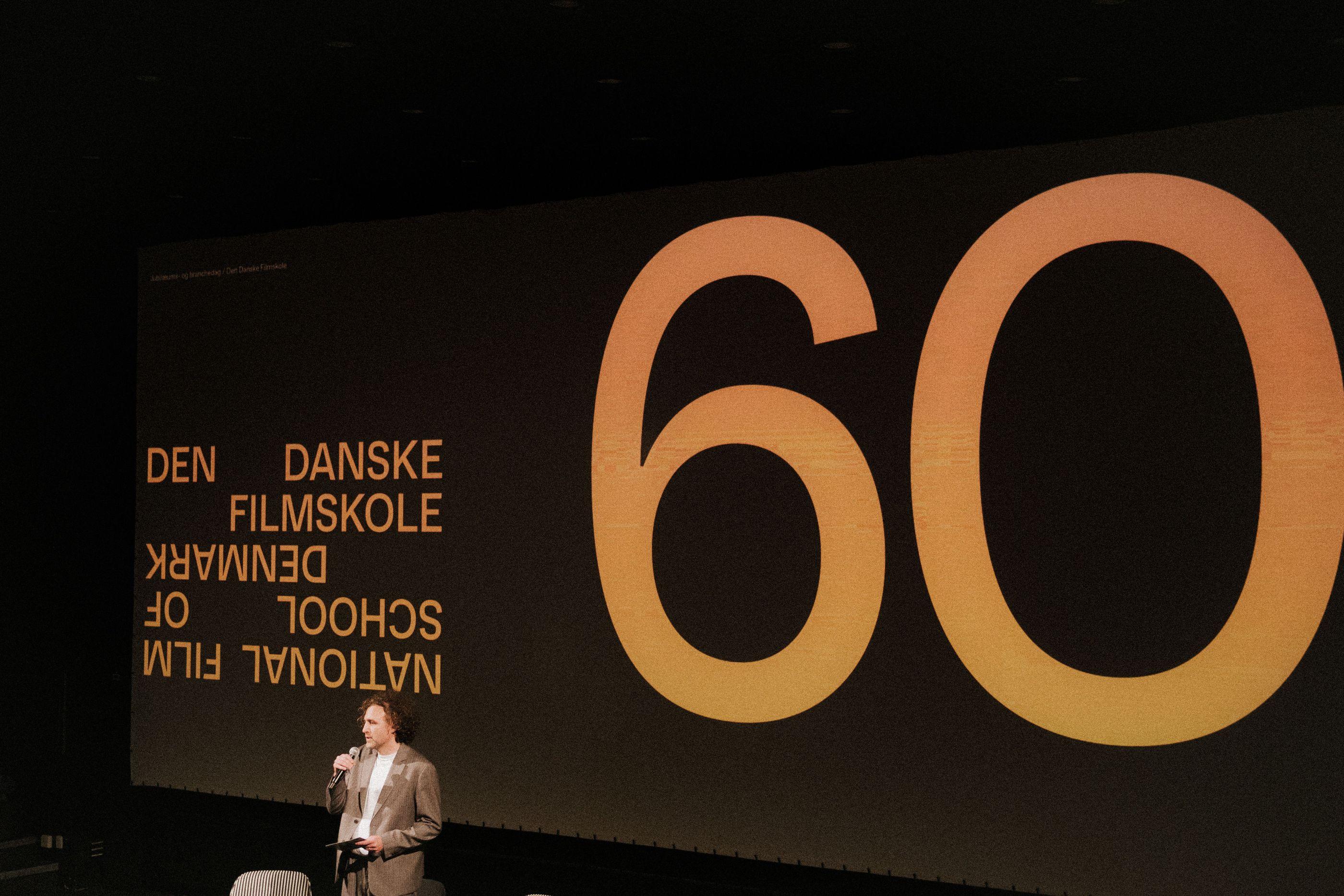
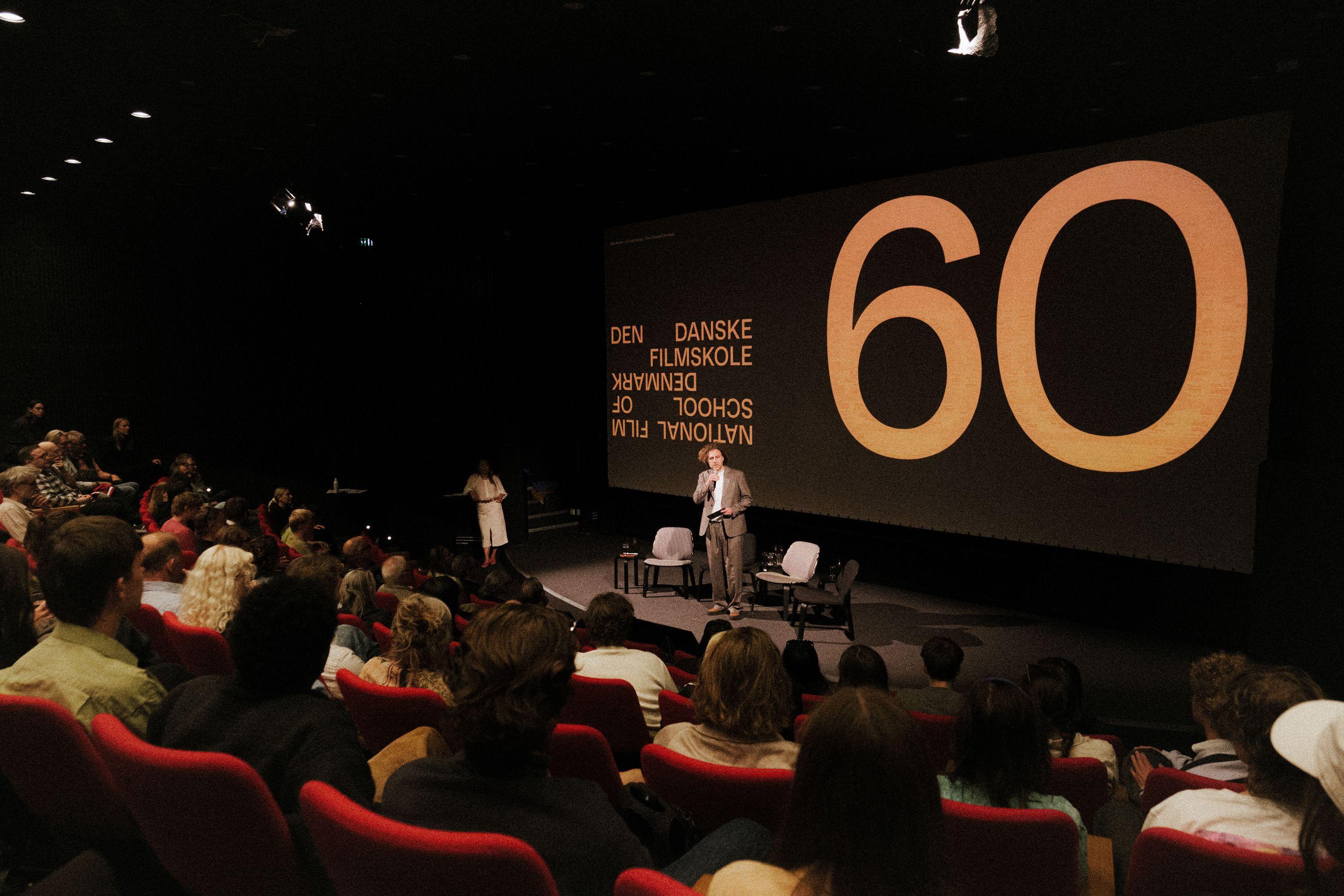
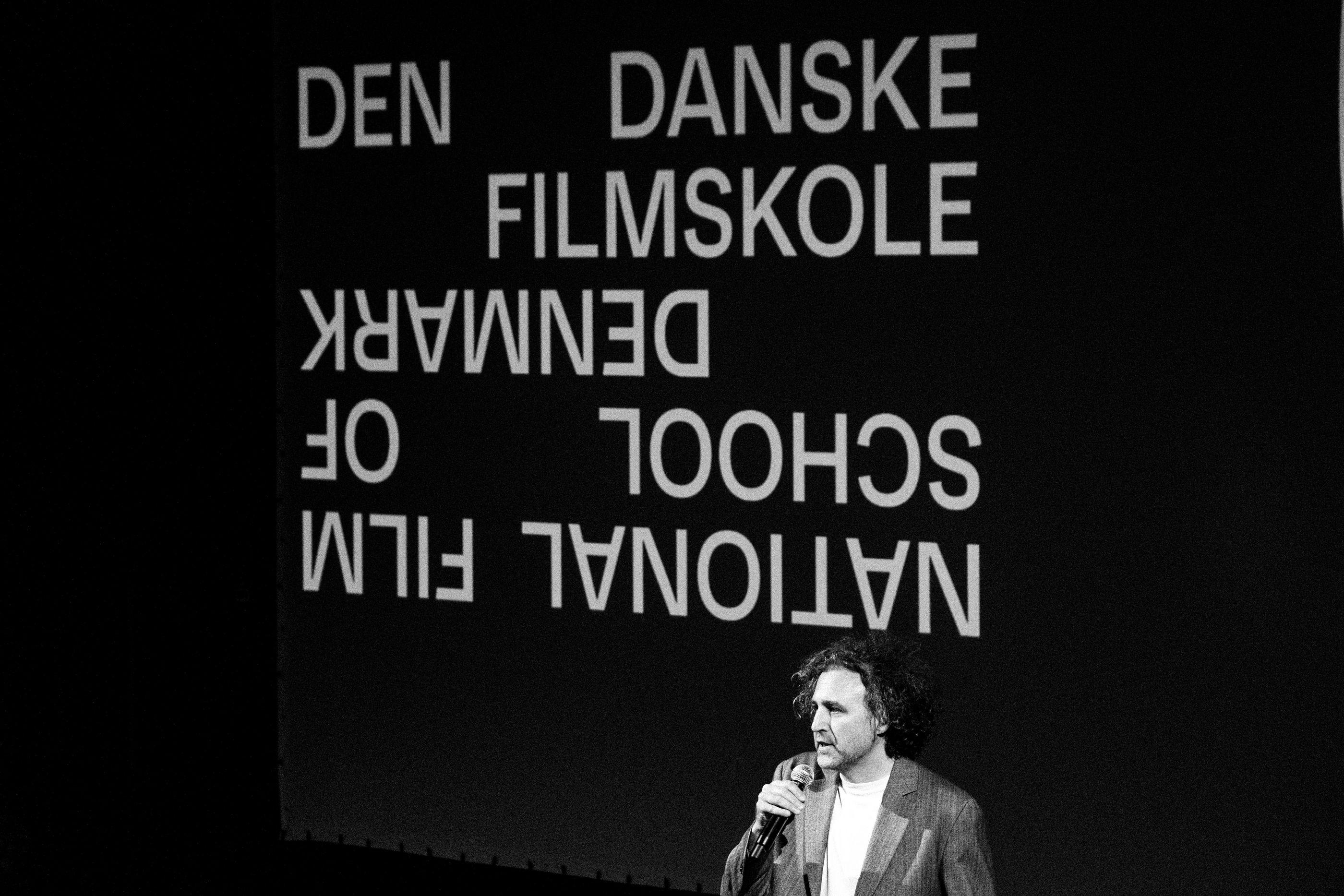
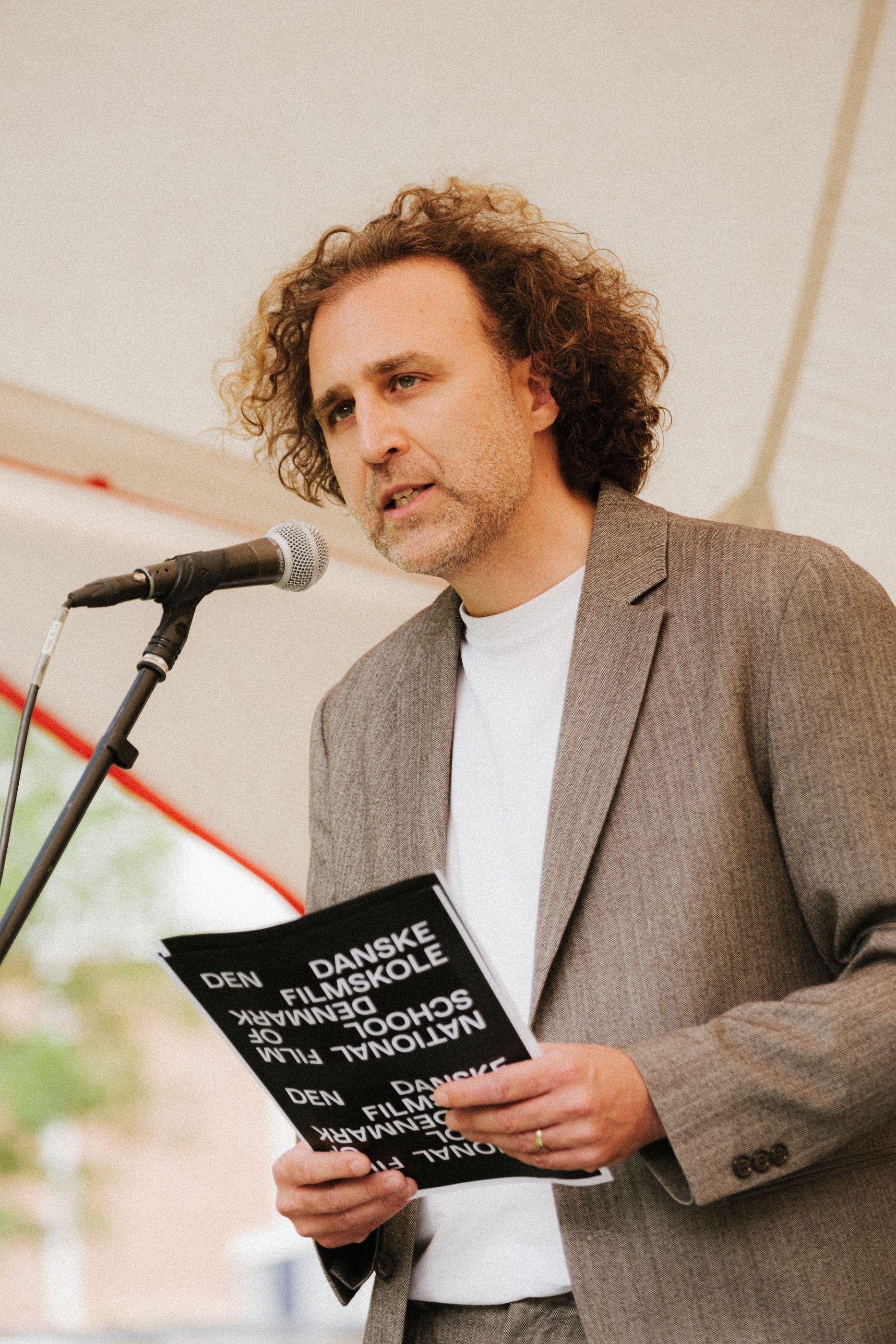
The National Film School of Denmark celebrated its 60th anniversary in 2026. At the annual Industry Day, the school’s President Kristoffer Hegnsvad reflected on the school’s past, present and future, and how, even though nearly everything has changed in those 60 years, the core task for the art, the artist and the industry alike, remains the same. Read his speech below.
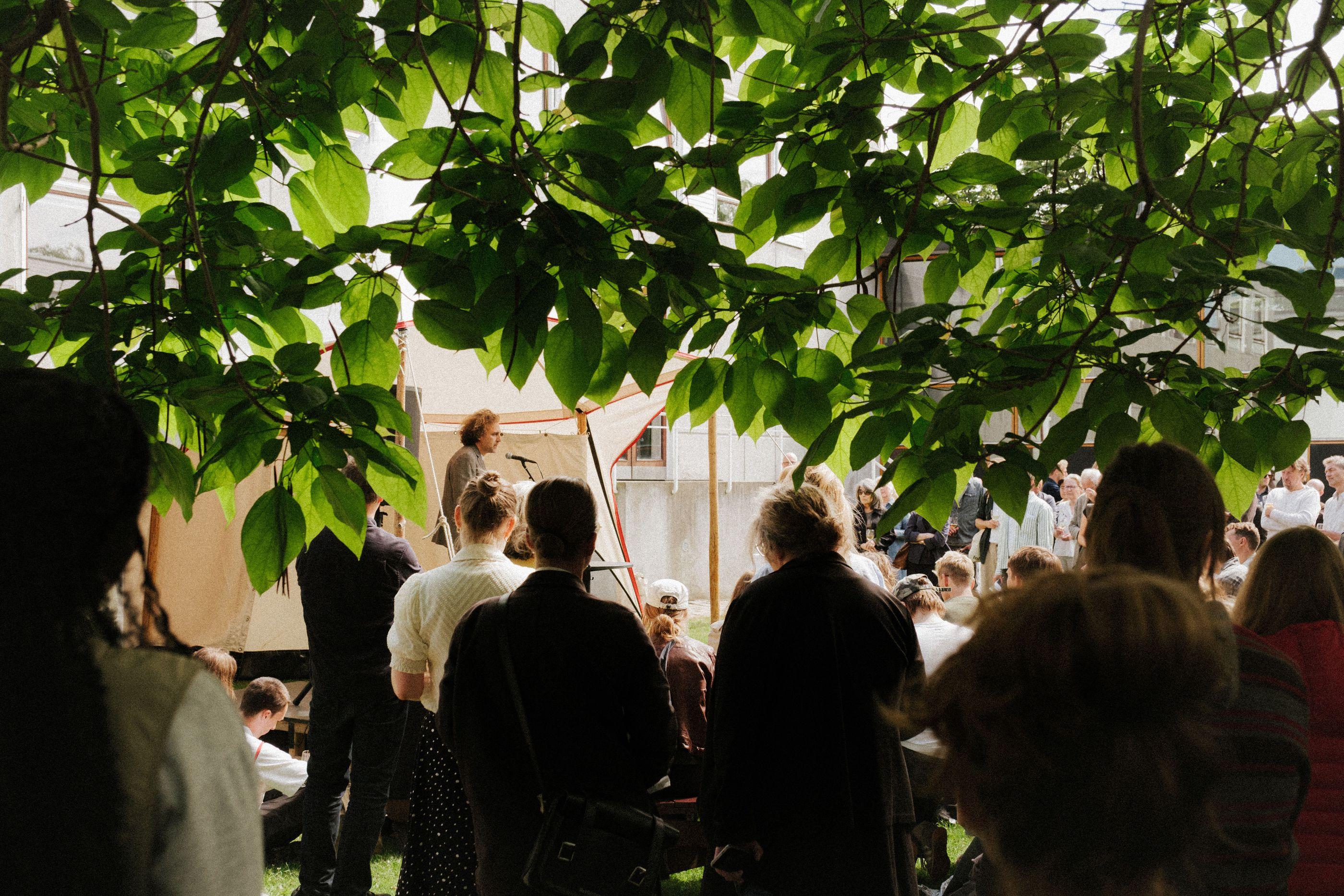
Good afternoon and welcome to the National Film School of Denmark.
Thanks for showing up.
Thank you for being here today for our annual Industry Day. This year, we have chosen the day to mark the School's 60th anniversary. It is now sixty years since the School first opened its eyes to the world of cinema shaped by pioneers Theodor Christensen and I.C. Lauritzen.
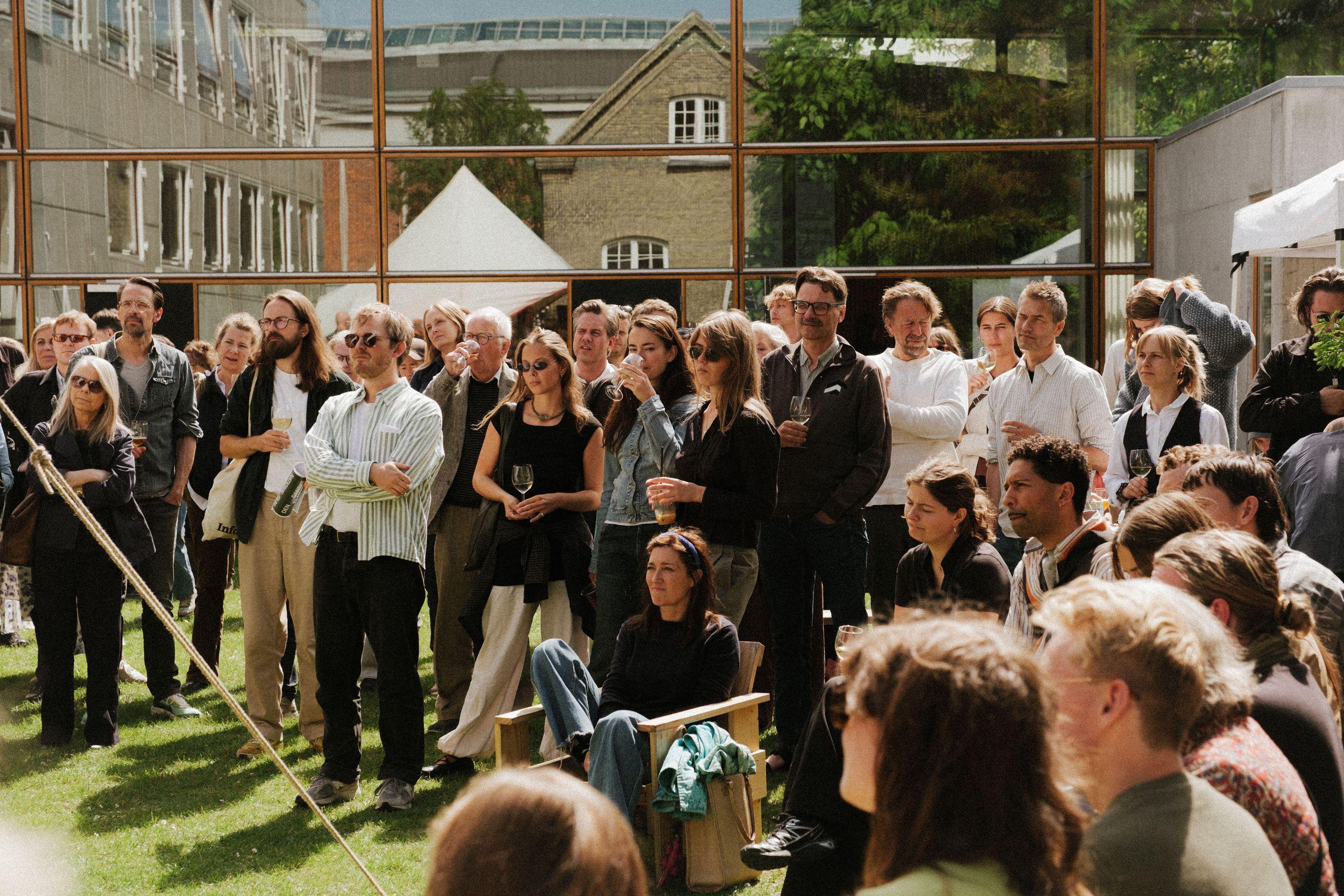
I am sure many of you are already deeply immersed in everything this day is about. Because beyond celebrating the art of film, today is all about encounters – about encountering the School, and, naturally, the students who before long will become part of the industry that you represent.
I am convinced that the Danish film industry would not be the same without the National Film School of Denmark.
Earlier today we heard former students – among them my predecessor Henning Camre – reflect on the School's origins.
At the onset, the Film School wasn’t exactly met with open arms. Yet I believe its distinctive strength lies precisely in the close relationship it has built with the industry over the decades.
At its best, that relationship takes the form of a generous tug-of-war between generations: between the experience, knowledge and hard-earned expertise of today's industry, and the aspirations, dreams and ambitions of the generation to come.
We have been doing it for six decades. School directors, teachers and remarkable filmmakers have built a school that has educated generations of significant filmmakers
On the one hand, some traditions are worth preserving – things that have worked and continue to work. On the other, visions and the potential for change loom which need space and room to unfold.
The National Film School of Denmark is the resonance space for these two forces and their mutual encounter.
The space for those who generously pass on their knowledge, and those who arrive determined to develop our shared art form and create stories that speak to both the present and the future.
We have been doing it for six decades. School directors, teachers and remarkable filmmakers have built a school that has educated generations of significant filmmakers.
And we have done so in a way that has reached far beyond these walls – into the Danish film industry, the national talent system and film schools elsewhere.
There have been successes and setbacks. Resonance and dissonance, internal debates and external challenges. But I believe we have been – and remain – the backbone of the Danish film industry.
A backbone in the literal sense: the structure that supports and sustains, whatever the times may bring, helping to ensure that Denmark will always have a film industry.
But also a backbone in a metaphorical sense: a place that stands firm in the belief that we are here not simply to serve an industry, but to develop the art of film.
A place where people come to study, to continue learning throughout their careers, to teach others, and to explore the uncharted territories of the cinematic art form.
To that end, I think it is worth remembering the film culture and cultural policy from which we emerged.
The School was founded in 1966, following a handful of likeminded institutions across Europe. These schools were born from a combination of dread of the past and hope for the future.
We came into being in the same spirit that gave rise to the Cannes Film Festival, founded in opposition to Mussolini's appropriation of the Venice Film Festival. And in the same spirit that inspired the German film schools and funding systems established by a generation that had witnessed cinema being turned into an instrument of Nazi propaganda.
I do not mention this to argue that film should be political – or apolitical, for that matter. Rather, it is to remind us that the ambition was to safeguard the freedom of cinema to become whatever each artist wished it to be.
Political or not. Conventional or resistant. Collective or deeply personal.
Venturing into this territory is best done tentatively. I know that.
Lately, we have witnessed international trends to narrow the space in which both film festivals and filmmakers are able to operate, to resonate.
These are difficult political times. There is much to be concerned about. Much to disagree on. And even when we do agree on the challenges we face, we often disagree on how best to respond to them.
That is why it is so important that we – all of us gathered here today – do what we can to preserve artistic space: to protect artistic expression as a realm of freedom and possibility.
I believe it is in the most difficult times that artists roll up their sleeves and continue working

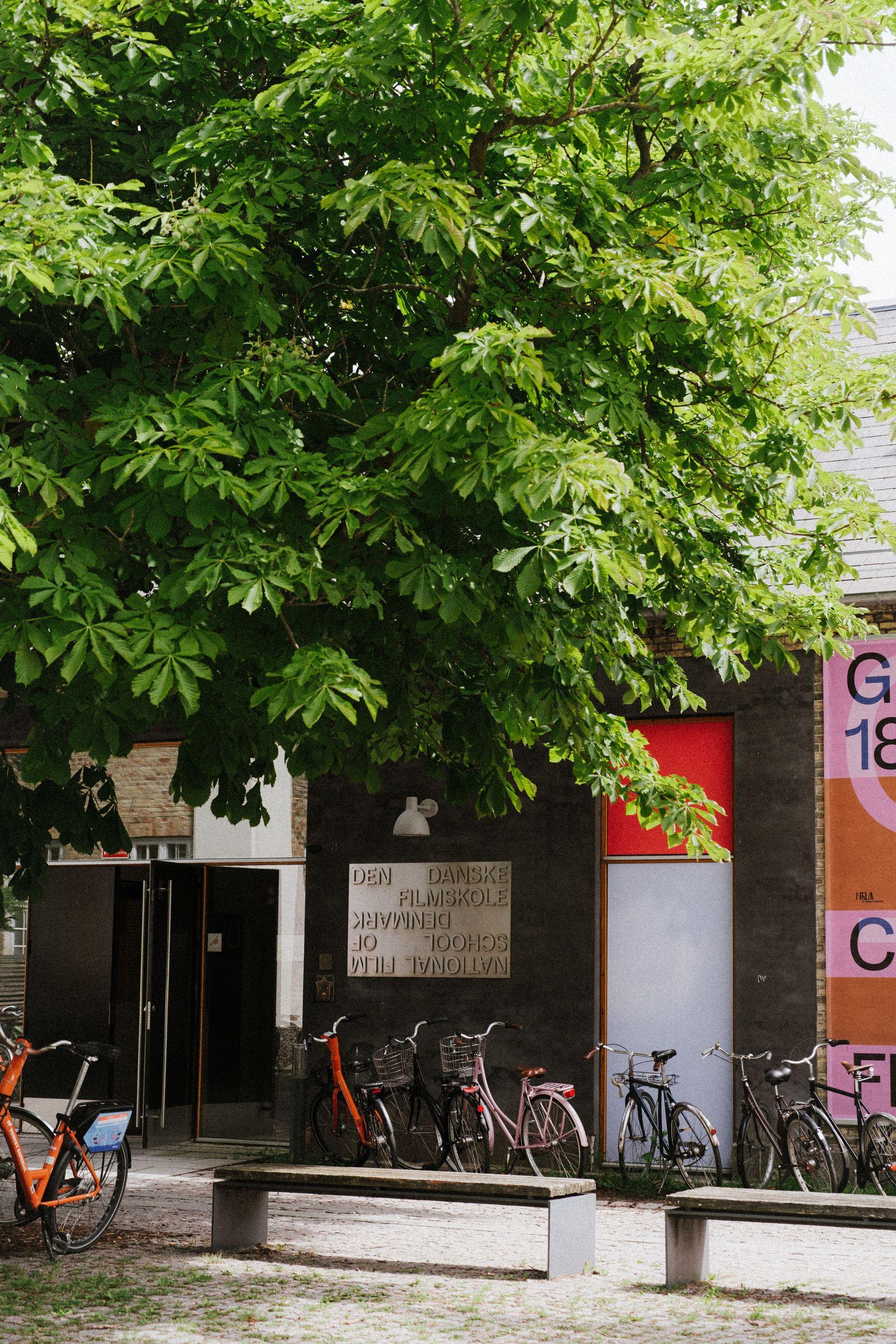
When I look at the two cohorts studying here today – those preparing their graduation films and those who began last August and are now completing their first year – I feel hopeful. Radically hopeful.
Historically, art has often been the place – sometimes the only place – where brazen boldness has been allowed to flourish; where curiosity about oneself and the surrounding world has found room to breathe; and where critique, or simply wonder, has been given a voice that might otherwise have remained unheard in other parts of society, where different agendas prevail.
Yesterday I discovered that, at the School's 25th anniversary, Henning Camre playfully suggested renaming the School Carl Th. Dreyer's Wheel of Fortune. Somehow that never caught on.
But there is something joyful about helping to keep this wheel turning. And once I have finished speaking, we will return to the cinema to see where the newest generation of Film School students currently finds itself on that wheel.
When I look at the two cohorts studying here today – those preparing their graduation films and those who began last August and are now completing their first year – I feel hopeful.
Radically hopeful.
I see new voices emerging. Voices that want to create striking cinematic moments and venture into questions for which there are no ready-made answers.
The future is uncertain.
But another tradition that has shaped us is the understanding that film – despite its relatively short history – has always had to find its way without a map.
The future of cinema has never been certain. Again and again, cinema has found itself in moments of crisis, moments when the path forward was unclear.
And perhaps that is precisely the point: an art form remains alive when it does not yet know what it can become.
Cinema was born in the marketplace, in a mixture of spectacle, commerce and technological boldness. It was therefore not immediately recognised as an art form.
Later, it was appropriated by political interests that regarded it primarily as a medium of mass communication.
The individual artist represents the very smallest minority who insists that their particular perspective – their way of using the camera, the writing tool or the editing table – might reveal something we did not know was there
Even so, artistic integrity was fought for – only to come under renewed pressure with the arrival of television, once seen as the next great threat.
Those debates may seem almost quaint today. But the important lesson remains the same: film has always existed in a state of crisis.
Cinema was born out of fire. It has always found itself at the centre of public debate, constantly balancing between the risk of disappearing and the possibility of reinventing itself.
I believe that is one of our greatest strengths as we face the challenges ahead.
As an art form, we have always had to balance visionary and deeply personal expression with large-scale collaboration, difficult production realities and the commercial market, which must be taken seriously – because without it there are no films.
Neither this one nor the next.
I am not afraid of the battles ahead.
We are used to fighting them.
We always have been.
Now we find ourselves feeling our way forward once again.
We have only just adjusted to the disruption brought about by the major streaming platforms. We have barely recovered from industry conflicts before entering the debates surrounding artificial intelligence.
Another tug-of-war is underway.
On the market floor in Cannes, conversations revolve around the efficiencies and possibilities offered by new technologies. On the red carpet, fists are raised and voices call for the robots to be stopped.
The truth, of course, lies somewhere in between.
It is not a question of choosing between surrendering to algorithms, capital and content production on the one hand, or retreating into isolated artistic integrity on the other.
We may well be living through a paradigm shift—perhaps one we would rather have been without. But we have the tools to venture into this new reality and find our way as we go.
I am not afraid of the battles ahead. We are used to fighting them. We always have been.
We have the ability to meet these challenges: the ethical questions, the questions of rights and authorship, and ultimately to make new technologies serve the art of film rather than the other way around.
Right now, we are all feeling our way forward together – without a map, without a fixed destination, trying to find the solid ground on which free art can live and breathe in this new reality.
I firmly believe that, as an art form, as an industry and as a school, we possess a remarkable ability of staying in the trouble together – we keep working, we keep building, we keep persisting, and ultimately that makes way for our continued renewal.
Because one thing matters now more than ever.
The world needs significant storytellers. It needs people willing to contribute something genuinely subjective at a time when the world appears increasingly uniform, while simultaneously fragmenting into countless echo chambers.
The writer Dave Eggers recently said that he fears a generation that allows machines to write on its behalf.
I do not share that fear.
Our creative tools may change.
They always have.
But when we look back, history reveals itself as layer upon layer of human dreams and traumas. Looking ahead, however, it is always the individual artistic voice that stands out.
The individual artist represents the very smallest minority who insists that their particular perspective – their way of using the camera, the writing tool or the editing table – might reveal something we did not know was there.
I believe those artistic voices will become even more important in the years to come.
And as such, the task for an artist is to have the boldness to keep moving forward without always knowing where we are going.
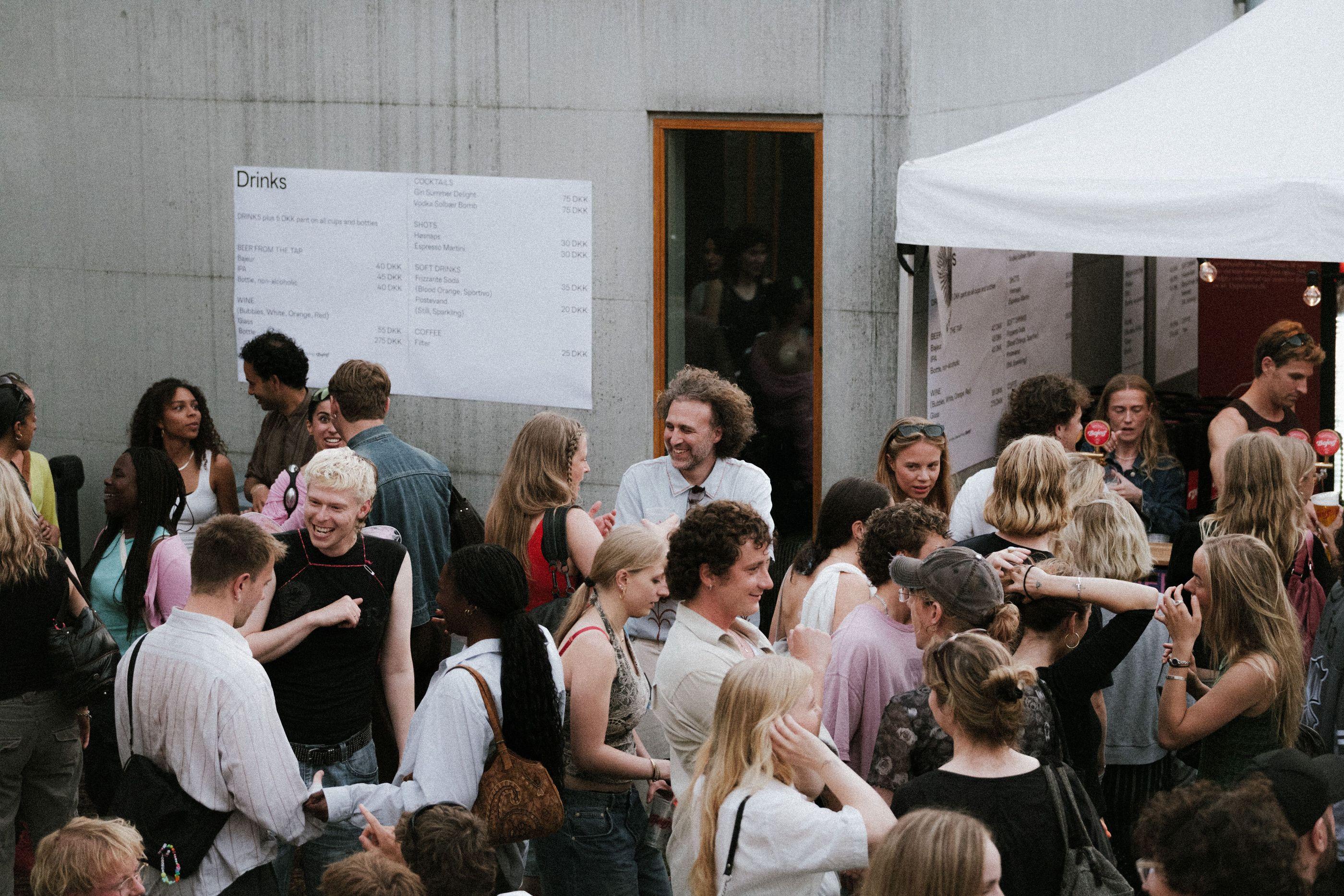
You do not have to spend much time in the archives, online or among people in the film community before someone describes the National Film School of Denmark as the best film school in the world.
That is, of course, a good story.
And like all good stories, it contains an important truth.
We are a small film nation with a world-class film tradition.
Many people have contributed to that over the past sixty years: visionary founders, dedicated leaders, outstanding teachers, a film industry that has consistently recognised the importance of the School and supported it, and, above all, generations of bold students.
Going forward, however, I believe the most important thing is that we remain willing to stay with the trouble together—to search together, to disagree, to experiment, and in doing so recreate, with every new class of students, new spaces for artistic expression.
I believe this is what Theodor Christensen, citing Bertolt Brecht, once called the joyful labour in the service of the art of film.
That is the work we will continue together—as we move into the future, or simply continue turning the wheel.
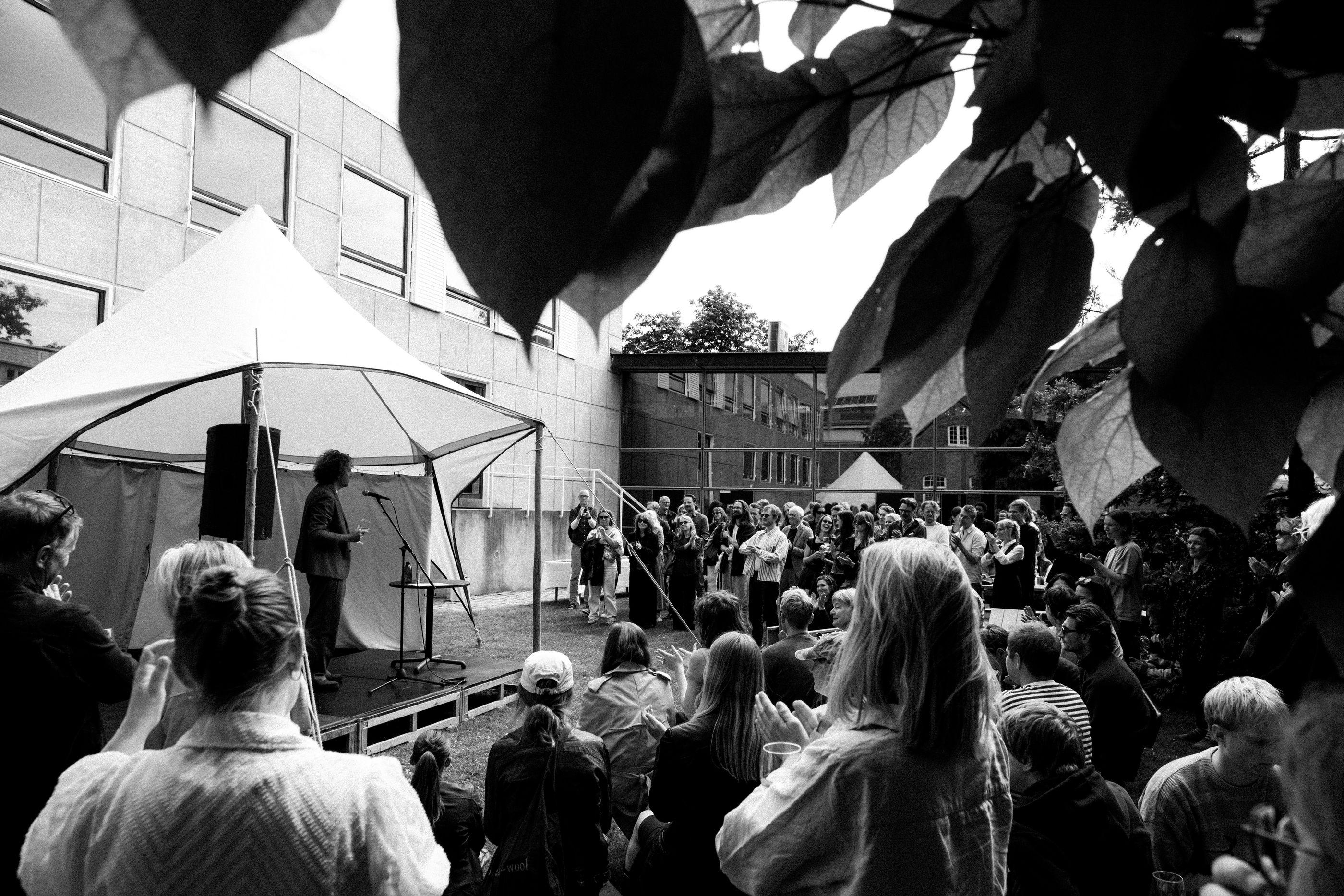
Thank you for being here today. Thank you for showing up.
And thank you for the joyful labour we continue to share.
Cheers!