Embodied Learning for Documentary Filmmakers
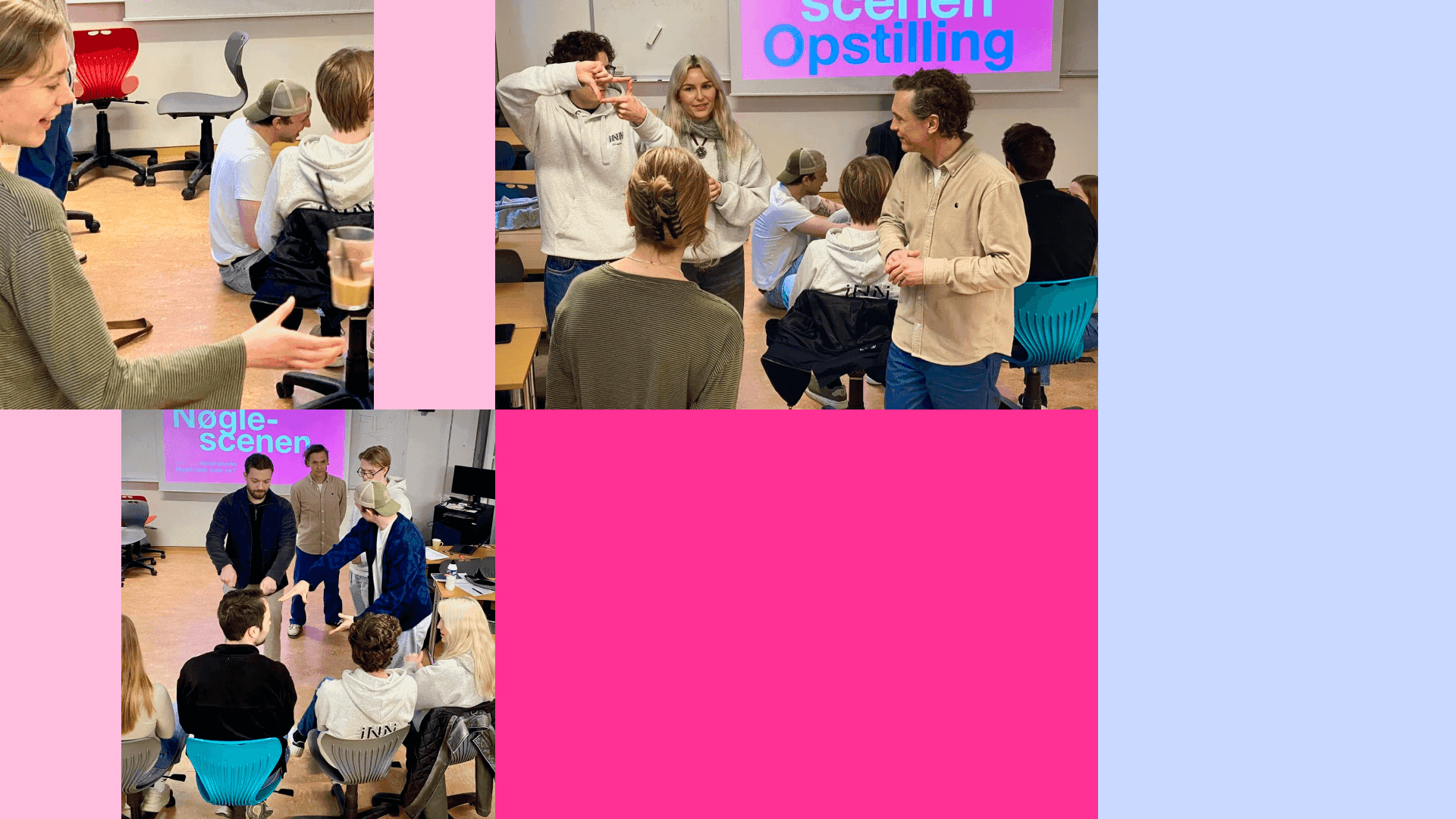
With the aim of establishing a Danish-Norwegian-Czech educational partnership, Jan Bacher Dirchsen has launched ‘Embodied Learning’, a learning initiative centred on using ‘one’s whole self’ in the learning process. Read more about the benefits of embodied learning below.
There are other ways to learn besides through thinking and theory. In fact, there is strong evidence to suggest that motivation and attention are enhanced when participants are physically engaged.
Physical actions can make complex situations easier to understand because you are actually taking action, and when the senses, emotions and physical interaction come into play, learning is reinforced and you are less likely to forget what you have learnt.
This is because involving the body creates more sensory and motor connections in the brain, which help to retain knowledge.
Another positive aspect is that it often strengthens relationships within the group, as members commit themselves physically and agree to the premise of learning with their whole body, not just their head. Last but not least, it is often simply more fun than traditional teaching, and there is a sense of ‘play’ to it.
Body-based learning makes extensive use of role-play, mindfulness exercises and constellations. The teaching is therefore designed to simulate the reality in which students will be working, and the classroom ideally becomes a ‘safe space’ where, at a distance from reality, they practise for real-life situations before going out to film with ‘real people in real situations.'
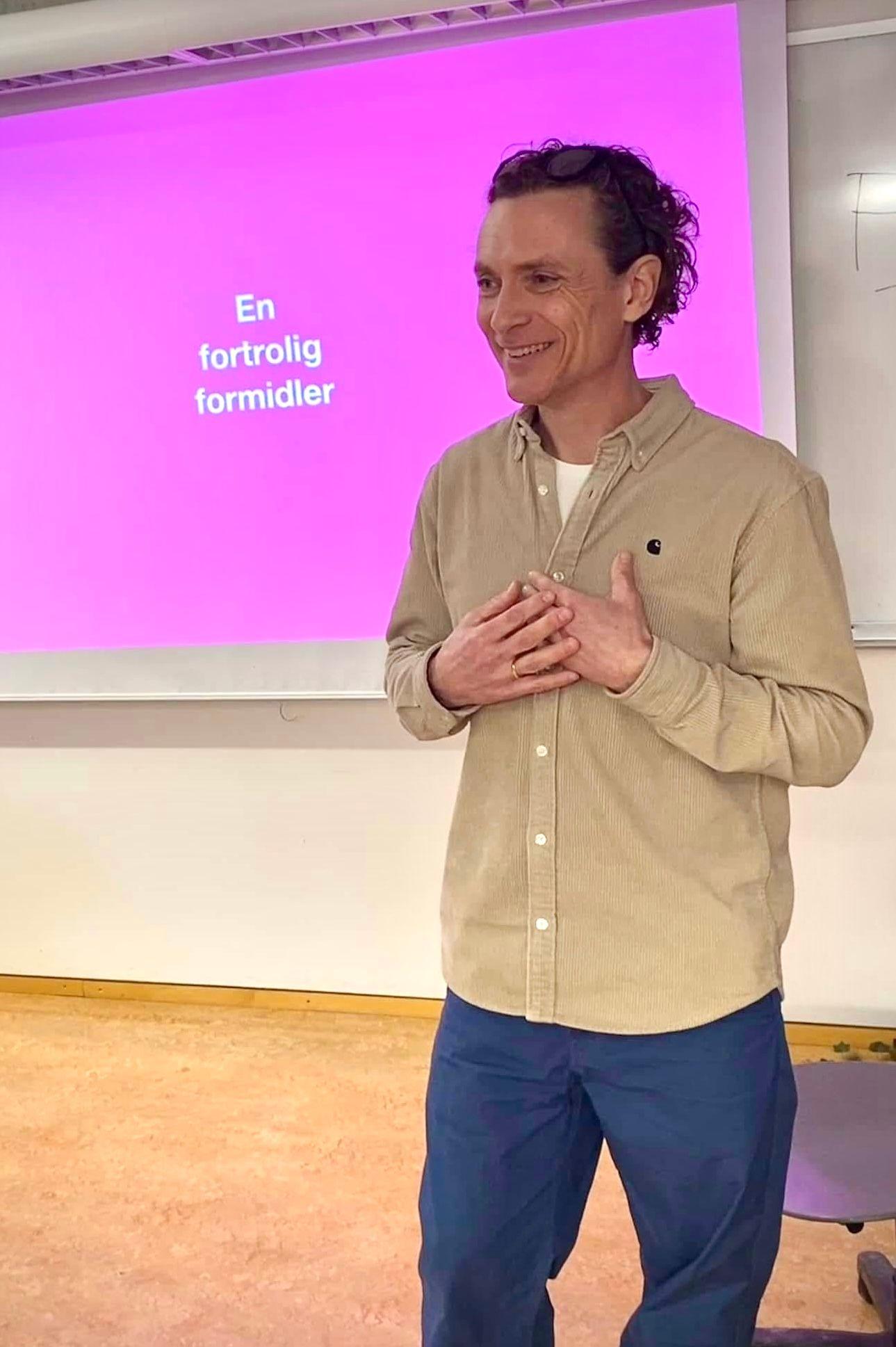
In his book titled 'Et spørgsmål om tillid – at lave tv med mennesker' (En. title: 'A Matter of Trust – Making Television with People'), Jan Bacher Dirchsen has shed light on what might be called the invisible side of working in film; namely, the relationship between the professionals behind the camera and the performers in front of it. Alongside his work as a producer, he has taught on the themes covered in the book, including as a guest lecturer at the TV School in Lillehammer, and in collaboration with Mette Nyseter, a project manager and teacher at the TV School.
Together, they have recently investigated and explored how we can transform theory and experience into enhanced learning and practical understanding through role-play and embodied learning exercises in the classroom.
The only other film and television school that uses role-play and Embodied Learning as a pedagogical method is FAMU – the ‘Film and TV School of the Academy of Performing Arts’ in Prague, the Czech Republic – under the leadership of lecturer Tereza Reichová.
And now the three practitioners are running a two-day workshop on role-play and Embodied Learning for a group of Czech documentary students at FAMU.
The aim is to jointly further develop this learning approach, in which participants use their whole ‘selves’ to acquire new knowledge: knowledge of their own patterns and the professional role they play, knowledge of the film project they are working on, as well as knowledge of collaboration and managing cast members.
In short: new knowledge about one’s own methodology, grounded in the body, action and experience.
Read more about the Norwegian Film School’s research initiative here.